
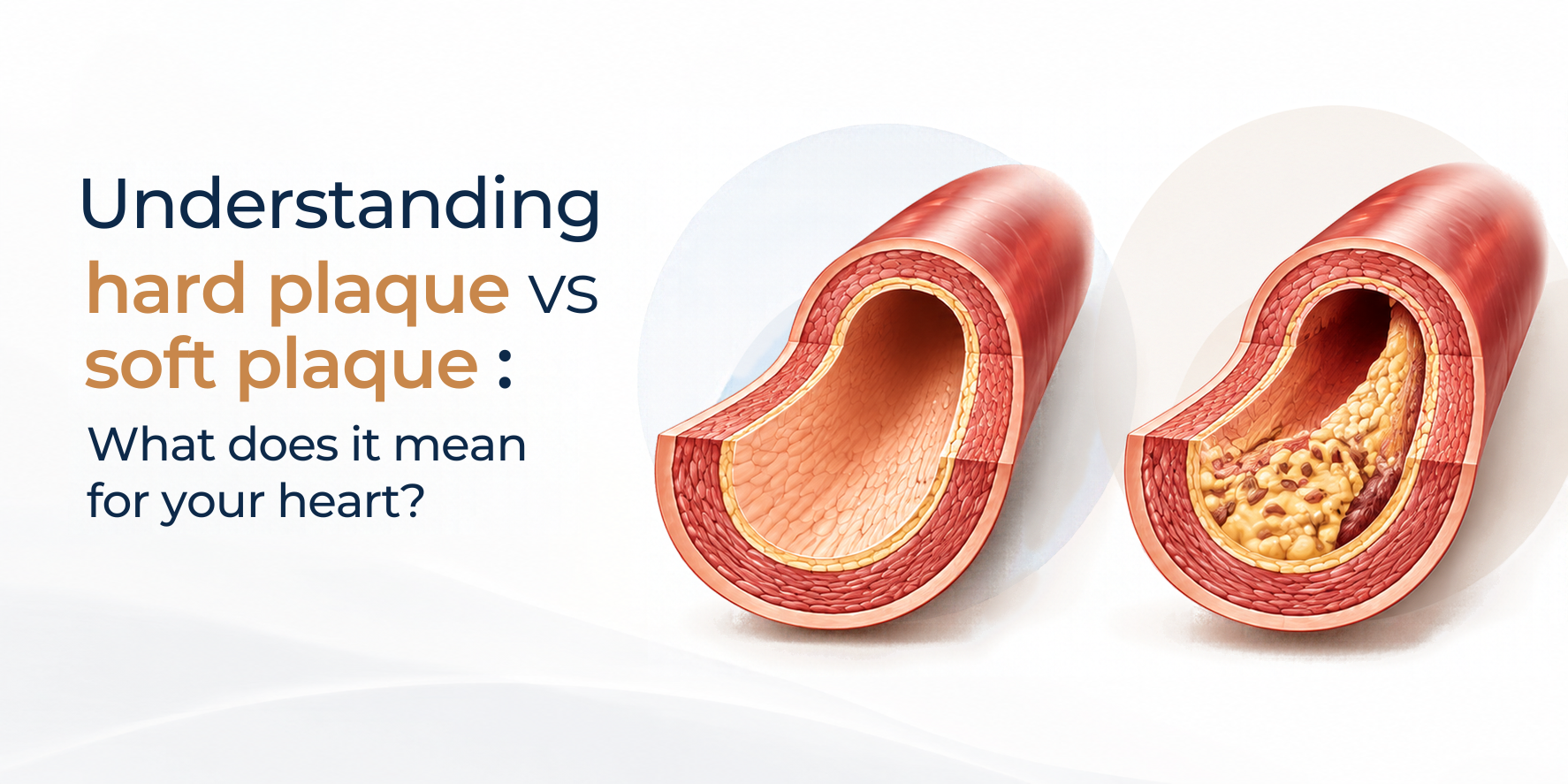
Why the type of plaque in your arteries may be just as important as how much plaque you have
Most people think of coronary artery disease as a gradual buildup of cholesterol that eventually clogs an artery, much like debris accumulating inside a pipe.
In reality, coronary artery disease is considerably more complex.
Atherosclerosis begins within the walls of the arteries, often decades before a person experiences chest pain or other symptoms. Cholesterol-containing particles enter the arterial wall, where they can trigger inflammation and contribute to the development of atherosclerotic plaque.
As the disease progresses, plaques can change in size, composition, and stability. Some become heavily calcified, while others remain relatively soft and rich in cholesterol and inflammatory cells.
Understanding the difference between these types of plaque is important because the plaque most likely to cause a heart attack is not necessarily the plaque producing the greatest narrowing of an artery.
What Is Soft Plaque?
Soft plaque generally refers to atherosclerotic plaque that has little or no calcium. It may contain cholesterol, fatty material, inflammatory cells, and other components.
Some soft plaques contain a large, lipid-rich core covered by a relatively thin layer of tissue called a fibrous cap.
When inflammation is active within the plaque, this protective cap may weaken, making the plaque more vulnerable to rupture.
If the cap ruptures, the contents of the plaque become exposed to circulating blood. This can trigger the formation of a blood clot, potentially causing a sudden obstruction of the coronary artery and a heart attack.
Importantly, this can occur even when the artery was not severely narrowed beforehand.
This helps explain why some individuals experience a heart attack despite having no prior chest pain, normal exercise tolerance, or no known history of cardiovascular disease.
However, not all soft plaque is unstable. The risk associated with an individual plaque depends on several factors, including its composition, inflammatory activity, structural characteristics, and the patient’s overall cardiovascular risk.
Research published in JACC: Cardiovascular Imaging has emphasized that calcification and plaque vulnerability are not interchangeable concepts JACC.
What Is Hard Plaque?
Hard plaque generally refers to atherosclerotic plaque that contains significant amounts of calcium.
Calcification often develops as atherosclerosis progresses and represents part of the arterial wall’s response to longstanding plaque and inflammation.
Larger, dense areas of calcification are frequently associated with more stable plaque characteristics. In fact, some cardiovascular treatments, particularly statins, may increase plaque calcification and density while reducing the amount of lipid-rich plaque and improving plaque stability.
This does not mean that calcified plaque is harmless.
The presence of coronary calcium is evidence that atherosclerotic disease exists.
Individuals with greater amounts of coronary calcium generally have a higher overall burden of coronary atherosclerosis and an increased risk of future cardiovascular events.
There is an important distinction here: a heavily calcified plaque may be relatively stable, but a person with extensive coronary calcification may still have substantial cardiovascular risk because of the overall amount of disease present.
In addition, small or spotty areas of calcification can sometimes be associated with higher-risk plaque features. Calcification therefore does not guarantee plaque stability.
Why Soft Plaque Can Be Particularly Concerning
One of the most important discoveries in cardiovascular medicine is that heart attacks are frequently caused by sudden changes in an atherosclerotic plaque rather than simply the gradual progression of an arterial narrowing.
A plaque may develop within the arterial wall without significantly obstructing blood flow. Because the artery can initially remodel outward as plaque accumulates, a person may have considerable atherosclerosis without experiencing symptoms.
Over time, inflammation and other biological processes can weaken certain plaques.
When a vulnerable plaque ruptures or undergoes surface erosion, a blood clot may form rapidly, potentially blocking the artery.
This is why assessing cardiovascular health solely by looking for severe arterial narrowing can miss important disease.
Preventive cardiology aims to identify at-risk individuals before plaque disruption causes a heart attack.
What Does a Coronary Calcium Score Tell You?
A coronary artery calcium (CAC) scan is a specialized CT examination that measures calcified plaque within the coronary arteries.
It is a useful tool for refining cardiovascular risk assessment, particularly in asymptomatic individuals when decisions about preventive treatment remain uncertain.
Generally, higher calcium scores are associated with a greater burden of coronary atherosclerosis and increased cardiovascular risk.
However, a calcium scan has an important limitation.
It detects calcified plaque, not noncalcified or soft plaque.
This means a person can have a calcium score of zero and still have coronary atherosclerosis.
A zero calcium score is generally associated with a low near-term risk of cardiovascular events, especially in appropriately selected asymptomatic patients. However, it does not completely exclude coronary disease, particularly in younger individuals or those with certain risk factors.
A calcium score of zero should also never be used to dismiss concerning symptoms.
For selected patients, coronary CT angiography can provide additional information about coronary plaque, including noncalcified plaque and the degree of arterial narrowing.
Decisions about additional imaging should be based on the patient’s symptoms, clinical findings, and overall risk profile.
The Role of Inflammation in Plaque Instability
Cholesterol is a major contributor to atherosclerosis, but it is not the only factor involved.
Inflammation plays an important role in the development and progression of coronary plaque.
When cholesterol-containing particles become trapped within the arterial wall, they can undergo chemical changes, including oxidation. These modified particles may stimulate inflammatory responses that contribute to plaque formation and progression.
Inflammatory cells within the plaque can release substances that weaken the fibrous cap, increasing the likelihood of plaque disruption.
This is one reason modern preventive cardiology increasingly considers both lipid-related risk and the inflammatory processes involved in atherosclerosis.
Advanced cardiovascular testing may include measurements such as apolipoprotein B (ApoB), lipoprotein(a), high-sensitivity C-reactive protein (hs-CRP), and selected additional biomarkers.
Some specialized panels also measure oxidized LDL and lipoprotein-associated phospholipase A2 (Lp-PLA2), which have been studied in relation to atherosclerosis and vascular inflammation.
These markers do not directly identify an unstable coronary plaque, and the clinical usefulness of some specialized biomarkers remains less established than that of conventional risk factors, ApoB, lipoprotein(a), or hs-CRP.
Nevertheless, when interpreted appropriately, selected laboratory findings may contribute to a broader understanding of cardiovascular health.
The important point is that atherosclerosis involves more than the amount of cholesterol circulating in the bloodstream. It is a complex disease influenced by lipid accumulation, inflammation, metabolic health, and individual susceptibility.
Can You Have Dangerous Plaque Without Symptoms?
Absolutely.
A person may exercise regularly, maintain a healthy weight, and feel entirely well while coronary atherosclerosis develops silently.
In many cases, coronary plaque doesn’t cause symptoms until the disease advances or a sudden plaque-related event occurs.
For some individuals, the first manifestation of coronary artery disease is a heart attack.
This is particularly important for people with a family history of premature cardiovascular disease, elevated cholesterol, hypertension, diabetes, smoking exposure, or other cardiovascular risk factors.
Being physically fit is beneficial and reduces cardiovascular risk, but it does not guarantee that coronary plaque is absent.
That is why prevention should focus on understanding an individual’s cardiovascular risk before symptoms develop rather than waiting for symptoms to prompt an evaluation.
Can Soft Plaque Be Stabilized or Reduced?
Yes. One of the most encouraging developments in cardiovascular medicine is the evidence that appropriately selected treatments can stabilize atherosclerotic plaque and, in some circumstances, produce measurable plaque regression.
Intensive LDL cholesterol lowering has been shown in clinical trials to reduce atherosclerotic plaque burden.
Studies such as ASTEROID and GLAGOV demonstrated that substantial LDL reduction, using intensive statin therapy or additional PCSK9 inhibition, can produce modest regression of coronary atherosclerosis as measured by intravascular ultrasound.
Other research has demonstrated favorable changes in plaque composition with lipid-lowering therapy, including reductions in lipid-rich components and increases in features associated with plaque stability.
This is important because successful treatment does not always mean that every plaque disappears.
In many cases, the objective is to reduce the biological activity of atherosclerosis, slow or reverse disease progression, and reduce the likelihood of future cardiovascular events.
Treatment may involve LDL-lowering medications, blood pressure management, smoking cessation, regular exercise, nutritional changes, and appropriate management of diabetes or other metabolic conditions.
The intensity of treatment should be individualized according to the patient’s cardiovascular risk and the presence or extent of established disease.
A More Comprehensive Approach to Cardiovascular Prevention
At Precision Heart, we believe preventive cardiology should go beyond a standard cholesterol panel and an occasional office visit.
Our approach focuses on understanding each individual’s cardiovascular health through physician-led risk assessment, appropriate advanced diagnostic testing, and ongoing monitoring.
This may include a detailed evaluation of cholesterol-related risk, selected inflammatory markers, family history, metabolic health, and imaging studies when clinically indicated.
The goal is not to order every available test. It is to identify meaningful risk factors.
If you want to understand your cardiovascular health beyond a routine screening,