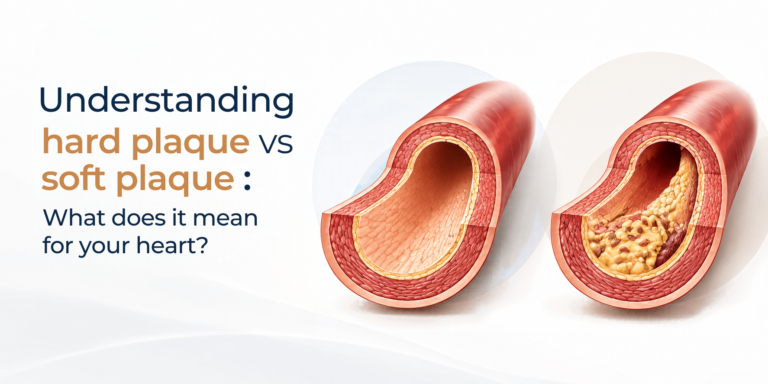
Heart disease does not always begin with obvious warning signs. Many people feel well, remain active, and continue with demanding careers and lifestyles without realizing that cardiovascular changes may already be developing beneath the surface.
Routine physicals, blood pressure measurements, cholesterol panels, and other standard screenings remain important. However, cardiovascular risk is influenced by many factors, including family history, metabolic health, lipid characteristics, inflammation, lifestyle, and the presence or progression of plaque.
This is why early cardiac risk detection can be an important part of a more proactive approach to cardiovascular health. The objective is not simply to perform more tests. It is to understand an individual’s risk earlier, interpret the findings appropriately, and determine whether action may be needed before a serious cardiovascular event occurs.
Here are four important benefits.
1. Identifying Risk Before Symptoms Appear
One of the greatest challenges with cardiovascular disease is that it can progress quietly.
A person may exercise regularly, maintain a healthy weight, perform well professionally, and have no chest discomfort or shortness of breath while still having cardiovascular risk factors that deserve attention. In some people, the first obvious indication of underlying disease may not occur until the condition has become significantly more advanced.
Earlier assessment creates an opportunity to identify hidden cardiovascular risk before symptoms become the reason for investigation.
This is especially important because feeling healthy and fully understanding cardiovascular health are not necessarily the same thing. Traditional measurements provide valuable information, but no single cholesterol number, blood pressure reading, or risk calculator can tell the complete story for every individual.
Looking at cardiovascular health more comprehensively can help physicians better understand whether additional evaluation, monitoring, or intervention may be appropriate.
2. Creating More Time to Act
Finding cardiovascular risk earlier provides something particularly valuable: time.
When potential concerns are identified before a major event, patients and physicians may have an opportunity to address contributing factors in a more deliberate way. Depending on the individual, this may include changes in nutrition, physical activity, sleep, blood pressure management, metabolic health, cholesterol-lowering therapy, or other physician-directed interventions.
This is where preventive cardiology becomes different from simply reacting to established disease.
The goal is to understand risk while there may still be an opportunity to influence its trajectory. Rather than waiting for symptoms to determine the next step, physicians can evaluate the available information and develop an appropriate strategy based on the patient’s overall cardiovascular profile.
Earlier knowledge does not guarantee that a cardiac event will never occur. But it can provide a larger window in which meaningful risk factors can be identified, managed, and followed over time.
3. Supporting a More Personalized Prevention Strategy
Cardiovascular risk is not identical from one person to another.
Two people of the same age may have similar routine cholesterol results yet have very different family histories, metabolic profiles, inflammatory patterns, lifestyles, or evidence of plaque. This is why cardiovascular prevention should not rely exclusively on population averages.
A more individualized assessment can bring multiple pieces of information together to create a clearer picture of the person sitting in front of the physician.
That is the foundation of personalized heart care.
Instead of asking only, “Is this number within the normal range?” the more useful question may be, “What do these findings mean for this particular individual?”
This approach can help physicians determine which findings deserve attention, which may simply require monitoring, and where intervention may offer meaningful benefit.
Importantly, personalization also helps avoid treating every patient in exactly the same way. The appropriate strategy for one individual may not be the right strategy for another.
4. Helping Reduce the Risk of a Major Cardiovascular Event
The most important reason to identify cardiovascular risk early is not simply to uncover an abnormal result.
It is to use that information appropriately.
Detecting hidden cardiovascular risk becomes meaningful when the findings lead to informed clinical decisions. The purpose is to understand what may be contributing to cardiovascular disease and determine what can reasonably be done to manage those factors before a heart attack, stroke, or another serious cardiovascular event occurs.
This is also why testing alone is not enough.
Advanced laboratory results, imaging, family history, lifestyle information, and traditional risk factors need to be interpreted together. Data without clinical context can create confusion rather than clarity.
Effective preventive cardiology connects detection with interpretation, intervention, and ongoing follow-up.
At Precision Heart health, the focus is not simply on finding more information. It is on understanding what that information means for the individual and using it to guide a thoughtful cardiovascular prevention strategy.
Ultimately, early cardiac risk detection is about gaining the opportunity to act while prevention may still make a meaningful difference.