
Many high performers take their health seriously. They exercise, watch their weight, schedule annual physicals, and pay attention to their laboratory results. Yet cholesterol remains one of the most misunderstood areas of cardiovascular health.
The problem is not that routine cholesterol testing lacks value. It clearly does. The problem is assuming that a few “normal” numbers automatically mean cardiovascular risk is low. According to the CDC Heart Disease Facts, heart disease remains one of the leading causes of death in the United States, highlighting why understanding cardiovascular risk requires a proactive approach.
At Precision Heart, we take a broader view. The goal of preventive cardiology is to understand what those numbers mean in the context of the individual, including family history, metabolic health, plaque burden, inflammation, lifestyle, and other clinically relevant factors.
Here are five common assumptions worth reconsidering.
Myth 1: All LDL Cholesterol Is the Same
A standard lipid panel usually reports total cholesterol, LDL, HDL, and triglycerides. These are useful starting points, but they do not describe the complete biology of cholesterol.
LDL particles vary in size, number, and composition. Smaller, denser LDL particles may be more likely to enter the arterial wall and participate in the process that leads to atherosclerosis. Particle number, ApoB, triglycerides, metabolic health, and other measures can add context that a single LDL concentration may not provide.
This is one reason cholesterol myths can be misleading. The question is not simply, “Is my LDL high or low?” A better question is, “What does my lipid pattern mean for my overall cardiovascular risk?”
Myth 2: “Normal” Cholesterol Means You Are Protected
A reassuring cholesterol panel can create confidence, but cardiovascular disease is not determined by cholesterol alone.
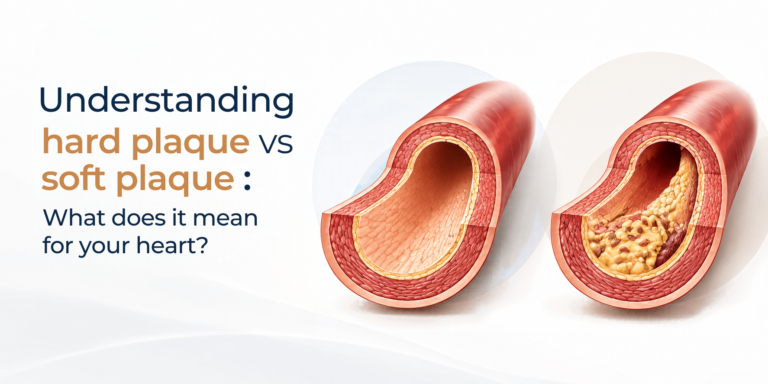
Atherosclerosis develops over time and can remain silent for years. Some people may have plaque or vascular inflammation despite routine numbers that do not appear alarming. Conversely, not every abnormal number carries the same significance for every person.
Research published in the Journal of the American College of Cardiology (JACC) highlights the importance of evaluating cardiovascular risk beyond traditional measurements and considering an individual’s overall risk profile.
When clinically appropriate, advanced cardiovascular screening may include additional lipid markers, selected inflammatory biomarkers, coronary artery calcium assessment, or other physician-directed testing. The purpose is not to order every available test. It is to determine whether deeper evaluation could help identify hidden cardiovascular risk that routine testing may not fully explain.
Myth 3: Cholesterol Is Only a Diet Problem
Food matters, but cholesterol is not simply the result of what you ate last week.
Genetics, liver metabolism, insulin resistance, body composition, activity, sleep, medications, and other health factors can influence a person’s lipid profile. Some individuals maintain excellent habits and still have significant inherited cardiovascular risk. Lipoprotein(a), for example, is strongly influenced by genetics and is not routinely included in every standard lipid panel.
Lifestyle remains foundational. Nutrition, regular exercise, healthy weight, sleep, and tobacco avoidance all matter. But lifestyle should not be used as proof that someone cannot be at risk.
At Precision Heart, the objective is to combine lifestyle information with the biology we can measure rather than assuming one cancels out the other.
Myth 4: Cholesterol-Lowering Medication Is Always Dangerous
Concerns about statins and other lipid-lowering medications are common, especially among people who feel well and do not see themselves as “patients.”
Medication decisions, however, should be based on an individualized discussion of risk and benefit. Statins have been studied extensively and are widely used to reduce cardiovascular risk in appropriately selected patients. Like any medication, they can cause side effects, and treatment should be monitored by a qualified clinician.
The key point is that fear should not replace clinical judgment. If meaningful plaque, inherited risk, or a high-risk lipid pattern is present, the conversation should focus on the individual’s overall risk, available treatment options, and how therapy will be followed over time.
Myth 5: A Standard Lipid Panel Tells the Whole Story
A standard lipid panel is valuable screening, but it is still a snapshot.
For some people, those four numbers may be enough to guide next steps. For others, they leave important questions unanswered. That is where advanced cardiovascular screening can become useful not as a replacement for routine care, but as an extension of it when the clinical picture warrants a deeper look.
This is also where Precision Heart differs from a testing-only model. More data is not automatically better. The value comes from physician interpretation: understanding how lipid characteristics, plaque, inflammation, family history, blood pressure, metabolic health, and lifestyle fit together.
That is why our approach to hidden cardiovascular risk focuses on detection, interpretation, and action rather than simply producing a longer lab report.
The Precision Heart Perspective
The most persistent cholesterol myths usually have one thing in common: they reduce cardiovascular health to a single number or a single behavior.
Precision Heart takes a more individualized approach. Through physician-led preventive cardiology, we look at the person behind the numbers and ask a more useful question: What is this individual’s actual cardiovascular risk, and what should be done about it?
For executives, entrepreneurs, and high performers, that distinction matters. Feeling healthy is valuable. Understanding whether your cardiovascular biology supports that feeling can be even more important.
Understand What Your Cholesterol Numbers May Not Be Telling You
Precision Heart provides physician-led cardiovascular assessment designed to look beyond routine screening and help you better understand your individual risk.